
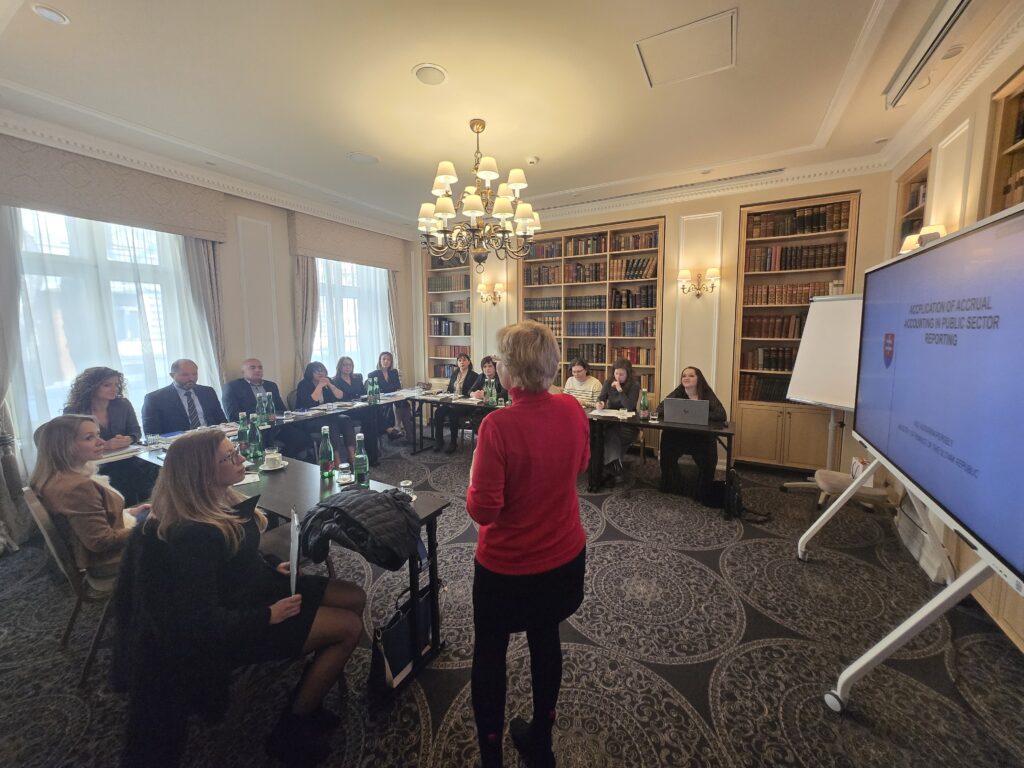
On 10-11 March 2026, representatives of the Ministry of Finance of Montenegro visited Slovakia to exchange knowledge and practical experience on accrual accounting reforms.
The two-day study visit focused on Slovakia’s experience with implementing accrual accounting in the public sector, as well as on financial reporting, cash and liquidity management, and electronic payment systems. The visit provided experts from the Treasury Directorate of the Ministry of Finance of Montenegro with an opportunity to learn directly from their counterparts at the Ministry of Finance of the Slovak Republic and State Treasury, whose structure and operations are closely interconnected.
Preparing for accrual accounting in Montenegro
Slovakia has been supporting public financial management reforms in Montenegro for several years. Since 2017, Slovak experts have assisted the Ministry of Finance of Montenegro in drafting the Law on Public Sector Accounting and related secondary legislation.
“The implementation of such reforms is a long-term process requiring careful preparation and capacity building, the cooperation has covered activities from training and strategic planning to assistance in developing the related legislative and regulatory framework”, mentioned Programme technical expert Lucia Kasiarova.
The Government of Montenegro has formally committed to introducing accrual accounting by 1 January 2027, as set out in the Law on Public Sector Accounting. The Ministry of Finance of Montenegro plays a central role in this process, as it is responsible for the development and implementation of public financial policies, including the transition to accrual accounting and the modernization of the state’s liquidity management system.
Accrual accounting is a method in which revenues and expenses are recorded when they are earned or incurred, rather than when money is received or paid. It helps governments track assets and liabilities more transparently, improve financial reporting and decision-making, and align with international public sector accounting standards and EU practices. Transitioning from cash to accrual accounting is therefore an important step in modern public finance management reforms.
Accounting, Reporting and Treasury Systems in Focus
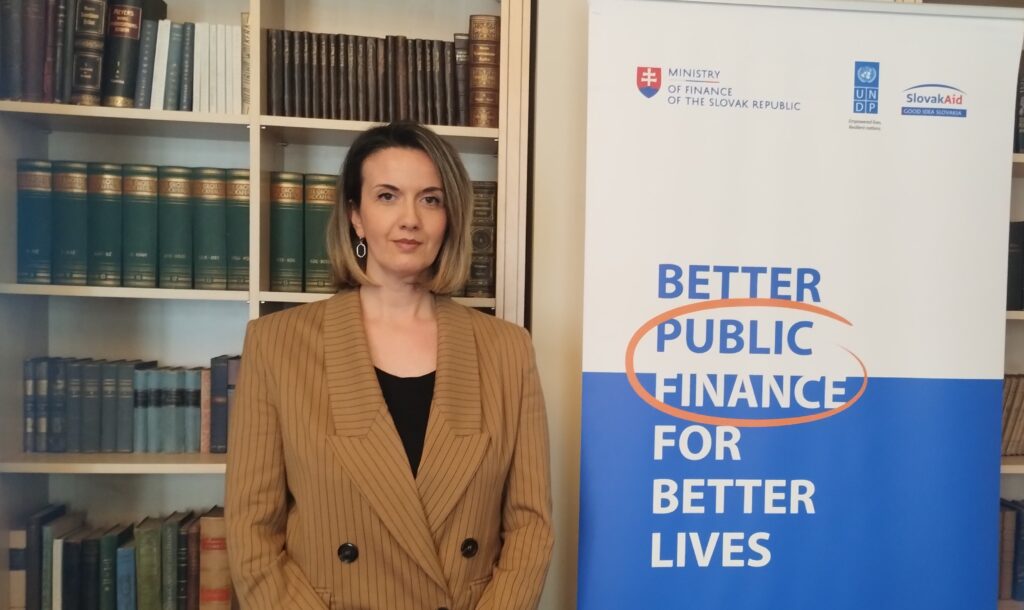
“Slovakia’s experience shows that the transition from cash to accrual accounting is a complex and long-term reform that requires strong coordination between the Ministry of Finance and other public institutions. One of the key lessons is the importance of continuous training and capacity building for public sector accountants, as well as the development of a robust IT system that integrates accounting with treasury operations and financial reporting. These elements are essential for ensuring consistent implementation and reliable financial information,” said Marija Uljarević from the Office for Budget Accounting and Reporting, Directorate for State Treasury.
During the study visit, discussions covered the application of accrual accounting in public sector reporting and the preparation of accrual-based financial statements. The participants also examined budget reporting and the application of the ESA methodology, as well as the linkages between public sector accounting and financial reporting in Slovakia. In addition, experts from the Slovak State Treasury presented the functioning of the organization, including cash and liquidity management, the organization of the state payment system, and the IT systems that support treasury operations and integrate accounting, payment, and budgeting modules.
As Marija Uljarević noted: “We were able to observe both similarities and differences between the State Treasury in Slovakia and the Directorate for the State Treasury of Montenegro. In both systems, the treasury plays a central role in payment processing, budget control, accounting and financial reporting. The comparison was particularly valuable because Slovakia is an EU Member State that has already implemented accrual accounting and integrated treasury systems in line with European standards. For Montenegro, which is progressing on its path towards EU accession, this experience provides a useful reference for how similar reforms can be implemented in practice and how accounting, reporting and treasury functions can support decision making and public finance management.”
Long-term cooperation between Slovakia and Montenegro
The study visit was organized within the country-level initiative Strengthening Public Finance Management in Montenegro, implemented through the Public and Private Finance for Development (PPFD) project and supported by the Ministry of Finance of the Slovak Republic and the United Nations Development Programme.
More information about the project: https://publicfinance.undp.sk/en/cierna-hora/